

Meet the Designer: Creative Process, and Available Pieces
Some objects earn their place quietly. They do not need loud shapes or heavy ornament. They work because the proportions feel right, the materials age well, and the details invite a second look. That is the kind of design that makes a home feel considered without feeling staged.
Work sits in that space between function and feeling. Each piece begins with a clear purpose, then gains character through material, texture, and restraint. At Minimous, the available selection reflects this balance: pieces made to be lived with, not only admired.
This profile looks at the designer’s story, the rhythm behind the creative process, and the types of pieces currently available through the Minimous edit.

A design story shaped by attention to everyday use
Approaches design through daily life rather than spectacle. The starting point is often a simple question: how will this object be touched, moved, placed, and used over time?
That practical curiosity gives the work its calm character. A chair is not only a silhouette. It is a place to pause. A lamp is not only a source of light. It changes the mood of a room at dusk. A table is not only a surface. It gathers books, cups, flowers, and conversations.
This way of thinking places the user’s habits at the center of the design without making the object feel overly engineered. The result is work that feels familiar at first, then reveals more with use.
Several themes appear again and again:
Clean proportions
Forms tend to feel balanced, with no part fighting for attention.
Material honesty
Wood, metal, glass, stone, ceramic, and textile are allowed to show their natural qualities.
Quiet practicality
Function leads the design, but never at the cost of warmth.
Long-term appeal
The pieces avoid trends that date quickly.
Rather than chasing novelty, focuses on refinement. A curve becomes softer. A junction becomes cleaner. A finish becomes more tactile. Small decisions carry the weight.
The creative process begins with observation
Good design often starts before sketching. For [Designer Name], the process begins with looking closely at how people inhabit a space. A room is full of clues: where light lands, which chair gets used most, how objects gather near an entryway, and what people leave within reach.
From there, ideas move through sketches, material studies, and prototypes. The process is rarely linear. A form may begin as a drawing, then change when a material resists a certain angle. A finish may seem right in theory, then feel too cold in a real room. A proportion may look elegant alone, then feel wrong beside other furniture.
This back-and-forth is part of the work.

The most successful pieces often come from this tension between idea and material. A sketch can suggest a perfect line, but the hand tests whether that line feels comfortable. A prototype can show whether an object has too much weight, too little presence, or just enough character.
The process commonly moves through a few clear stages:
Observation
The designer studies use, scale, movement, and atmosphere.
Sketching
Early forms are explored quickly, often in many small variations.
Material testing
Samples reveal how a finish behaves in light and touch.
Prototyping
The object is built, adjusted, and tested at real scale.
Editing
Anything unnecessary is removed until the piece feels resolved.
That final stage matters most. Editing is where restraint becomes visible. It is where the object stops trying to explain itself and simply works.
The pieces available at Minimous reflect a calm point of view
The Minimous selection highlights pieces that share a common design language, even when they serve different roles in the home. The edit may include furniture, lighting, decorative objects, and functional accessories, each chosen for how it contributes to a quieter, more intentional interior.
The appeal lies in how these pieces can settle into different settings. They do not demand a room built around them. Instead, they add structure, texture, or softness where needed.
A low table can ground a seating area. A ceramic vessel can bring weight to a shelf. A lamp can soften a corner. A sculptural object can create a pause on a console or mantel.
What ties the selection together is useful beauty. These are not objects that rely on excess. The strength comes from proportion, finish, and the relationship between form and function.

When choosing from the Minimous edit, it helps to think about the role each piece will play:
A grounding piece
A light-shaping piece
A tactile piece
A focal detail
Choose a table, bench, or larger object with visual weight.
Look for lighting that changes the atmosphere, not only the brightness.
Bring in ceramic, textile, wood, or stone to add depth.
Select one sculptural object that rewards close attention.
A room does not need many statement pieces. Often, one strong object does more when it has space around it. Work sits well with that approach. The forms are confident, but they leave room for the rest of the home to breathe.
Why the work feels timeless without feeling plain
Minimal design can sometimes feel cold when it removes too much. [Designer Name] avoids that by keeping the human side of the object visible. A softened edge, a textured surface, or a warm material can change everything.
That warmth also comes from scale. A piece should relate to the body and the room around it. If a seat feels too rigid, it fails. If a vessel feels too delicate to handle, it becomes distant. If a lamp casts harsh light, the shape does not matter much.
The best objects hold together three qualities:
They serve a clear purpose.
They feel good in use.
They add atmosphere without noise.
This is why the work fits naturally into homes built over time. It pairs well with vintage pieces, simple architecture, natural fabrics, and collected objects. It can sit in a spare room or a layered one. The design does not insist on perfection.
It also invites slower buying. Rather than filling a space quickly, the Minimous approach favors pieces chosen with care. One well-made lamp, table, vessel, or chair can shift the tone of a room more than a full set of matching items.
That is the value of a good edit. It helps narrow the field and make each choice feel more deliberate.
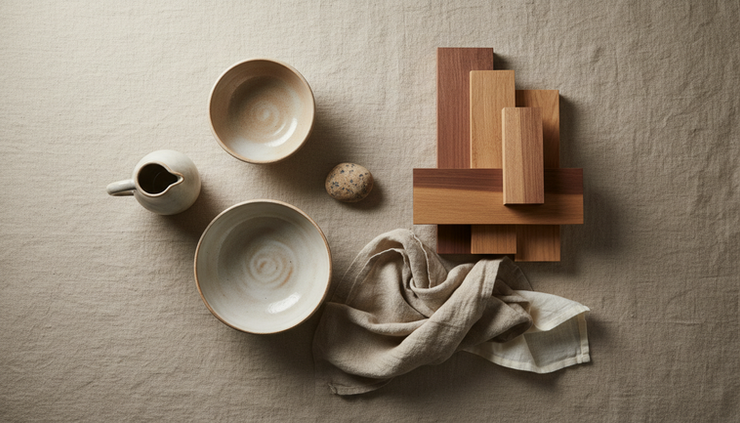
A considered way to bring the designer’s work home
Story is best understood through the objects themselves. The work does not chase attention. It rewards attention. That difference is what gives the pieces their lasting appeal.
For anyone exploring the available selection at Minimous, the best starting point is simple: choose the piece that solves a real need, then look for the detail that makes it special. Maybe it is the curve of a lamp, the weight of a table, the texture of a ceramic form, or the way a material changes in afternoon light.
A home gains character through choices like these. Small, specific, and made to last.


Comments